Education & learning support
Children attend local schools and receive individual learning support. Reading sessions, homework assistance, educational assessments and remedial support help each child make progress.
Protection · Play · Education
A safe home is the starting point. Through learning, therapeutic care, play and life skills, we help children heal, grow in confidence and discover what is possible.
Our childcare and support teams provide safety, nourishment, stability and compassionate care. We work to give children as normal a childhood as possible, with opportunities to take part in school and community life.
Our partnerships include the Durban University of Technology, the University of KwaZulu-Natal, Sherwood Assessment Centre and local hospitals.
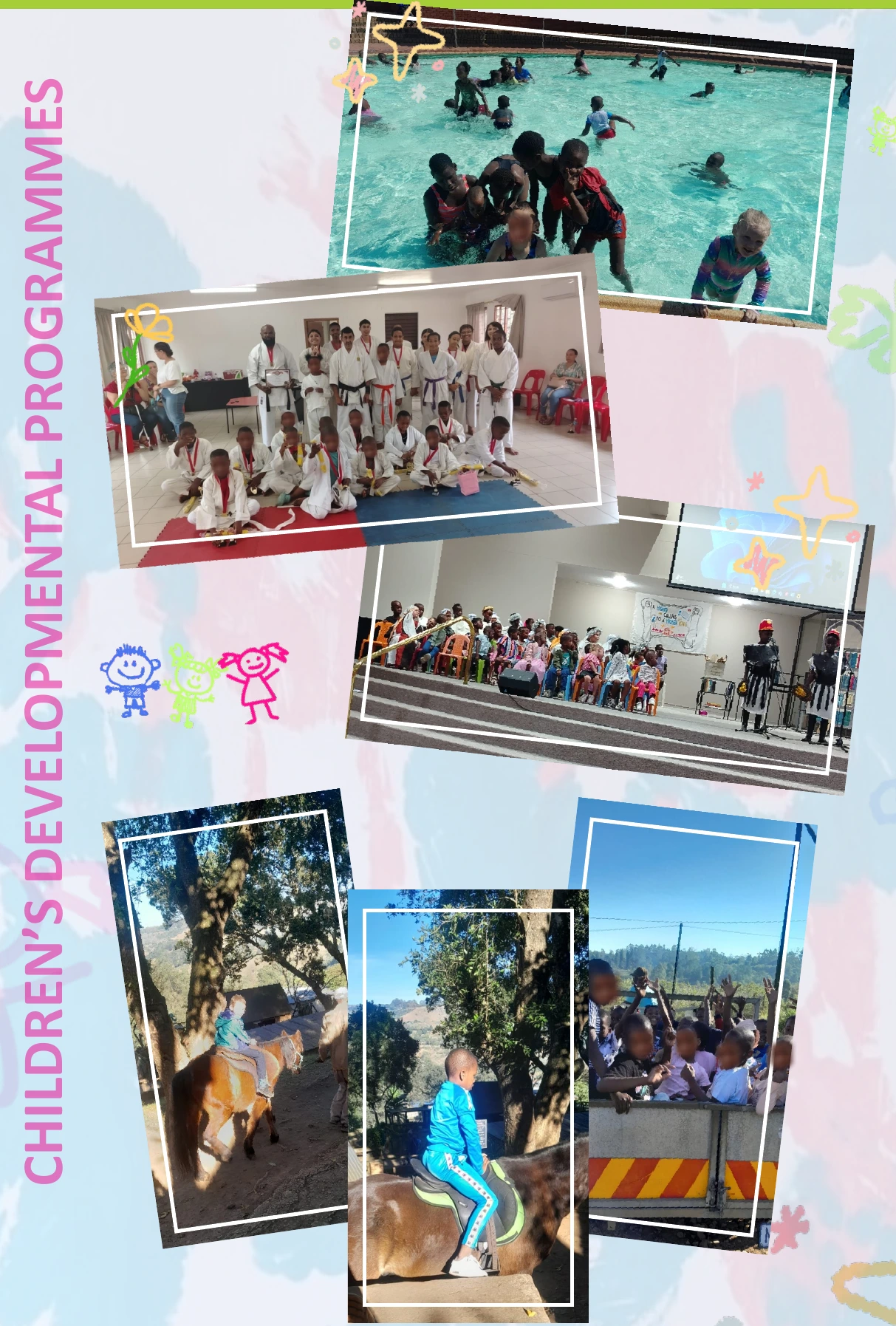
Our developmental programmes
Children attend local schools and receive individual learning support. Reading sessions, homework assistance, educational assessments and remedial support help each child make progress.
Our Social Worker coordinates support including speech therapy, trauma counselling, behavioural support and emotional care, working with universities, assessment services and local hospitals.
Karate supports discipline, emotional regulation, confidence and self-esteem. Structured activities help children develop positive habits and a sense of achievement.
The fishing programme with Teach a Kid to Fish encourages teamwork, patience, healthy competition and practical skills. The report celebrates girls achieving first and second place in the programme.
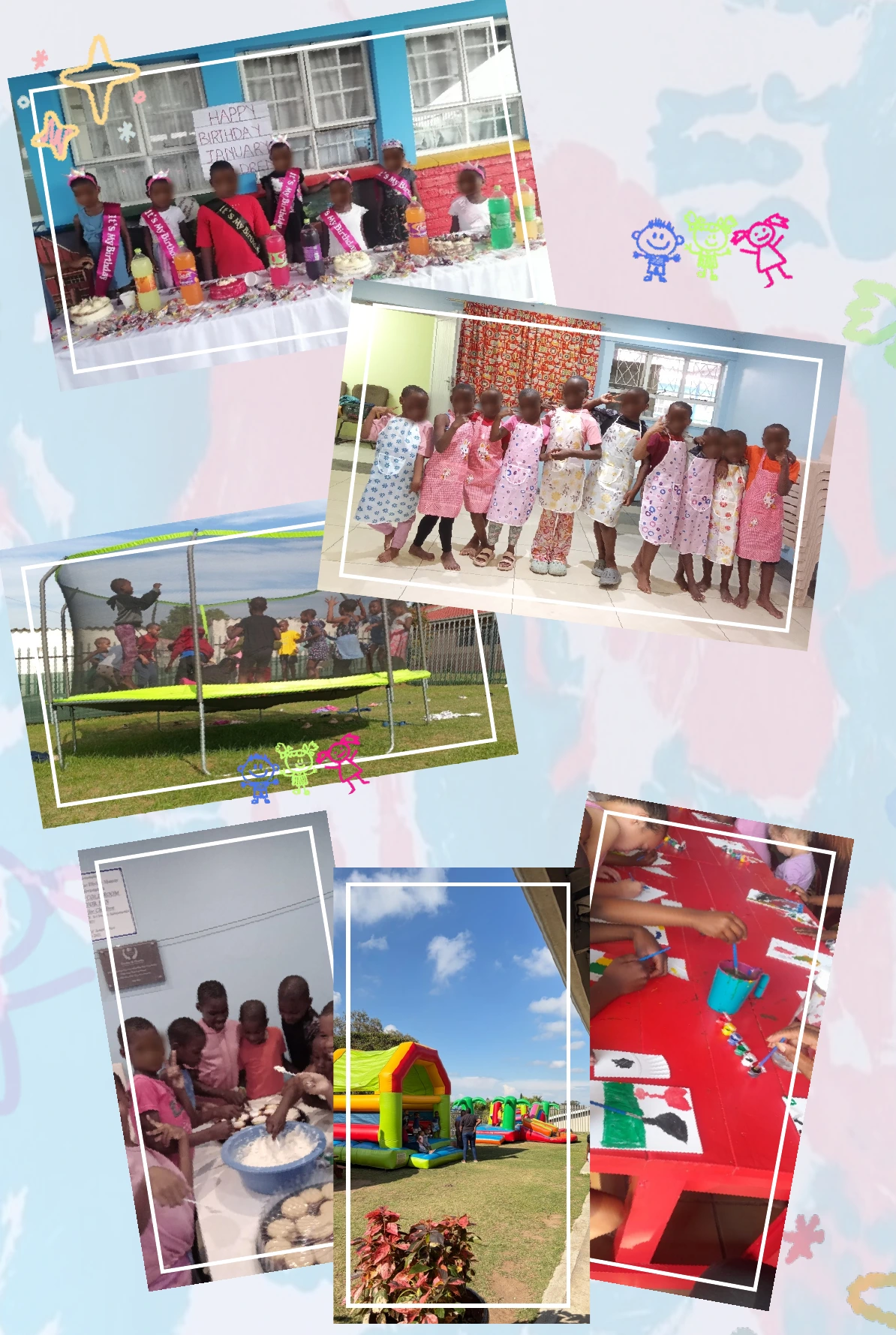
Visits to parks, beaches, theatres, botanical gardens and community attractions create opportunities to learn, explore and enjoy childhood. Birthdays and holiday programmes add moments of joy.
Sunday School and church activities provide opportunities for faith, values, hope and belonging, as described in the Manager’s Report.
2025/2026 social work report
Our Social Worker works with placement social workers, the Department of Social Development and Child Welfare to support safe family contact, reunification and appropriate placements.
During the 2025/2026 reporting period, the Home cared for 55 children. More than 20 children spent time with families during holidays and weekends, supported by follow-up visits and monitoring. The report records six successful family or foster reunifications: four with biological families and two with non-related foster parents.
Five children moved to other homes because of age requirements. New admissions were supported through assessment, counselling and care planning.
Moments from our year
Together, we build brighter tomorrows